


CONTENT HUB
Key Lessons From
Four key lessons learned from books that have changed the perspective of many successful people's daily life courses, including that of Dr. Jones-Lemmons.

KEY LESSONS FROM Man's Search For Meaning
By Viktor Frankl
Viktor Frankl, a psychiatrist and Holocaust survivor, explores how finding meaning is the key to human survival. He introduces "Logotherapy," which focuses on the future and our will to find purpose. The book argues that we can find meaning even in extreme suffering.

KEY LESSONS FROM the Four Agreements.
By Don Miguel Ruiz
Don Miguel Ruiz draws on ancient Toltec wisdom to reveal how socially conditioned "agreements" create unnecessary suffering and limit our potential. The book proposes four simple yet powerful transformative tenets to break these self-limiting patterns and reclaim personal freedom and happiness. By adopting these new agreements, individuals can replace a life of fear and judgment with one of love and internal peace.

KEY LESSONS FROM
Atomic Habits
By James Clear
A guide to building good habits and breaking bad ones through small changes.

KEY LESSONS FROM
Sapiens
By Yuval Noah Harari
An exploration of human history from ancient times to modernity.

KEY LESSONS FROM
The Alchemist
By Paulo Coelho
A tale about pursuing dreams and listening to one’s heart.

KEY LESSONS FROM
The Power of Now
By Eckart Tolle
A spiritual guide to living fully in the present moment.

KEY LESSONS FROM
To Kill a Mockingbird
By Harper Lee
A story about racial injustice and moral growth in the American South.

KEY LESSONS FROM 4- Hour Work Week
By Tim Ferriss
Tim Ferriss challenges the traditional "deferred life plan" of working for decades to retire late in life. It introduces the "New Rich" lifestyle, which focuses on leveraging currency, time, and mobility to live your dreams right now. The book provides a step-by-step framework—Definition, Elimination, Automation, and Liberation—to escape the 9-to-5 grind.

KEY LESSONS FROM Antifragile
By Nassim Nicholas Taleb
Nassim Nicholas Taleb introduces a category of things that don't just withstand shock, but actually improve and grow stronger because of it. Taleb argues that while the "resilient" resists shocks and the "fragile" breaks, the "antifragile" thrives on volatility, randomness, and disorder. The book provides a framework for designing lives and systems that can benefit from the unpredictable "Black Swan" events of the modern world.
KEY LESSONS FROM Atomic Habits
By James Clear
James Clear explores how tiny changes in behavior lead to remarkable long-term results. He emphasizes building systems rather than just setting goals. The book provides a practical framework for making good habits easy and bad habits hard.

KEY LESSONS FROM Best Self
By Mike Bayer
by Mike Bayer encourages readers to strip away their socially constructed facades to reveal their "Authentic Self," the person they are at their core. The book introduces the concept of the "Anti-Self," the fearful and self-sabotaging persona that holds us back from our true potential. Through a series of diagnostic tools and exercises, Bayer provides a blueprint for improving seven key areas of life, from social circles to personal health.

KEY LESSONS FROM Building a Second Brain
By Tiago Forte
Tiago Forte introduces a system for digital knowledge management called CODE (Capture, Organize, Distill, Express). He argues that our brains are for having ideas, not storing them, and we need an external system to save our best insights. This methodology helps modern "knowledge workers" turn information into creative output.

KEY LESSONS FROM Can't Hurt Me
By David Goggins
David Goggins shares his journey from an overweight, depressed young man to a world-class Navy SEAL and ultramarathon runner. He introduces the "40% Rule" and the concept of "callousing the mind." The book is a raw exploration of self-discipline.

KEY LESSONS FROM Clear Thinking
By Shane Parrish
Shane Parrish explores how to master your mind and make better decisions by recognizing the biological "defaults" that lead us astray. He provides a toolkit for identifying the gap between impulse and action. The book focuses on building systems that favor long-term logic over short-term emotion.

KEY LESSONS FROM Company of one.
By Paul Jarvis
Paul Jarvis challenges the traditional business growth model, arguing that staying small is often a smarter and more sustainable strategy. The book explains how to build a business that prioritizes autonomy, resilience, and personal fulfillment over the constant pursuit of expansion. It provides a blueprint for creators and entrepreneurs to thrive by focusing on better, rather than bigger.

KEY LESSONS FROM Crushing It
By Gary Vaynerchuk
Gary Vaynerchuk explores how modern entrepreneurs can leverage social media platforms to build a powerful personal brand and turn their passions into professional success. The book provides updated strategies and real-world case studies of individuals who used the principles from his previous work, Crush It!, to achieve financial independence. Vaynerchuk emphasizes that in the digital age, authenticity and a relentless work ethic are the ultimate competitive advantages.
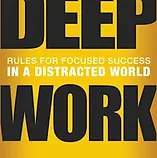
KEY LESSONS FROM Deep Work
By Cal Newport
Cal Newport argues that the ability to focus without distraction on cognitively demanding tasks is becoming a "superpower" in our increasingly fragmented economy. Newport distinguishes between "deep work," which produces high-value results and elite skills, and "shallow work," which consists of logistical-style tasks that are easily replicated. The book provides a rigorous framework for cultivating intense concentration to achieve peak productivity and personal fulfillment.

KEY LESSONS FROM Eat That Frog
By Brian Tracy
Brian Tracy focuses on overcoming procrastination by identifying and tackling your most difficult task first. The "frog" is the one item on your to-do list that you are most likely to procrastinate on but has the greatest impact. The book provides 21 practical steps to stop procrastinating and get more done in less time.

KEY LESSONS FROM Emotional Intelligence
By Daniel Goldman
Daniel Goleman challenges the traditional view that IQ is the sole determinant of success, arguing that our ability to manage emotions is even more critical. The book explores the biological and psychological roots of our "two minds"—the rational and the emotional—and how they shape our destiny. Goleman provides a scientific blueprint for improving personal and social competence to achieve better health, relationships, and professional performance.

KEY LESSONS FROM Essentialism
By Greg McKeown
Greg McKeown argues that the "disciplined pursuit of less" is the only way to maximize your contribution to the things that truly matter. He challenges the "I can have it all" mindset and replaces it with a focus on "the right thing, in the right way, at the right time". The book provides a systematic process to eliminate the nonessential and clear the path for what is vital.

KEY LESSONS FROM Flow
By Mihaly Csikszentmihalyi
Mihaly Csikszentmihalyi explores the state of "optimal experience" where people are so involved in an activity that nothing else seems to matter. He argues that happiness is not a fixed state but something we can cultivate through deep engagement. The book explains how to find "flow" by balancing challenge and skill.

KEY LESSONS FROM Getting Things Done.
By David Allen
David Allen introduces the GTD system, a productivity framework designed to clear mental clutter by capturing all tasks in an external system. He argues that our brains are for having ideas, not holding them. The book provides a step-by-step method for organizing commitments and regaining "mind like water" focus.

KEY LESSONS FROM Good To Great
By Jim Collins
Jim Collins explores why some companies make the leap to superior performance while others remain merely average. Based on a five-year research study, the book identifies specific management strategies and company characteristics that drive long-term transition from mediocrity to excellence. It argues that greatness is not a matter of circumstance or luck, but a result of disciplined people, disciplined thought, and disciplined action.
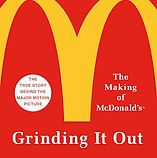
KEY LESSONS FROM Grinding It Out
By Ray Kroc
Ray Kroc tells the story of how he turned a small burger stand into the global McDonald’s empire at age 52. He focuses on the importance of standardization, persistence, and finding the right partners to scale a vision. The book is a testament to the idea that it is never too late to start something massive.

KEY LESSONS FROM Grit
By Angela Duckworth
Angela Duckworth argues that passion and long-term perseverance are better predictors of success than talent. She defines "grit" as the marriage of high interest and steady effort. The book explores how anyone can cultivate this trait.

KEY LESSONS FROM How To Become A Straight A Student
By Cal Newport
Cal Newport shares the unconventional strategies used by real top-tier college students to get better grades with less stress. He focuses on efficient study habits, time management, and "smart" note-taking rather than brute-force memorization. The book is a tactical guide to academic high performance.
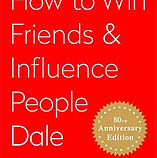
KEY LESSONS FROM How to Win Friends and Influence People
By Dale Carnegie
Dale Carnegie is a classic guide to improving interpersonal skills and building meaningful connections. It argues that success depends less on technical expertise and more on the ability to understand, motivate, and relate to others. The book provides timeless principles for handling people, making a lasting impression, and persuading others without causing resentment.

KEY LESSONS FROM Meditation Without Myth
By Jeff Haden
This book challenges the popular idea that sitting in silence is the only "true" way to achieve mindfulness or peace. It argues that active engagement and flow states can be just as meditative as traditional practices for many people. The book provides alternative paths to mental clarity for those who struggle with conventional meditation.

KEY LESSONS FROM Million Dollar Habits.
By Brian Tracy
Brian Tracy explains that your character and your successes are the direct results of the habits you have formed throughout your life. The book provides a practical roadmap for identifying and adopting the specific behaviors practiced by self-made millionaires and high achievers. It argues that by consciously replacing limiting patterns with productive ones, anyone can take control of their financial and personal destiny.

KEY LESSONS FROM Mindset
By Carol Dweck
Carol Dweck explores the difference between a "fixed mindset" and a "growth mindset." A fixed mindset believes abilities are innate, while a growth mindset believes they can be developed. This shift in perspective impacts success in school, work, and relationships.

KEY LESSONS FROM Never split the difference.
By Chris Voss
Chris Voss, a former FBI hostage negotiator, shares field-tested techniques for high-stakes negotiations. He emphasizes empathy and emotional intelligence over cold logic. The book provides practical tools like "mirroring" and "labeling."

KEY LESSONS FROM No Excuses.
By Brian Tracy
Brian Tracy argues that self-discipline is the "master key" that unlocks the door to all other virtues and personal success. The book asserts that your ability to control your impulses and stay focused on long-term goals is the primary differentiator between high achievers and everyone else. It provides a practical guide for applying disciplined habits to three major areas: personal success, career and finances, and the overall quality of life.

KEY LESSONS FROM Noise
By Daniel Kahneman
Daniel Kahneman, Olivier Sibony, and Cass Sunstein explore why humans make inconsistent judgments in professional fields like medicine and law. They define "noise" as unwanted variability in decisions that should be identical. The book provides "decision hygiene" techniques to reduce errors and improve accuracy.

KEY LESSONS FROM Originals
By Adam Grant
Adam Grant explores how individuals can champion new ideas and buck conformity without risking everything. The book challenges the myth that creative icons are bold, natural-born risk-takers, showing instead that they are often cautious and plagued by self-doubt. Grant provides a data-driven guide for recognizing winning ideas, speaking truth to power, and building a culture that welcomes dissent.

KEY LESSONS FROM Outliers
By Malcolm Gladwell
Malcolm Gladwell examines the factors that contribute to high levels of success, arguing that it is not merely a result of individual talent or ambition. He explores how hidden advantages, such as cultural background, family, and the era in which one is born, play a massive role in shaping an "outlier." The book challenges the myth of the "self-made man" by showing that success is often a product of timing and extraordinary opportunity.

KEY LESSONS FROM Pedagogy of the Oppressed
By Paulo Freire
Paulo Freire critiques the traditional "banking" model of education where students are passive containers for a teacher's knowledge. He proposes a "problem-posing" method that encourages critical thinking and social liberation. The book is a foundational text for social justice and transformative teaching.

KEY LESSONS FROM Predictably Irrational
By Dan Ariely
Dan Ariely challenges the assumption that humans make logical, highly reasoned decisions in their daily lives. Through a series of social experiments, Ariely demonstrates that our "irrational" behaviors are not random but follow systematic, repeating patterns. The book provides a fascinating look at the hidden forces—like emotions, social norms, and relativity—that consistently steer our choices away from pure logic.

KEY LESSONS FROM Purple Cow
By Seth Godin
Seth Godin argues that traditional advertising is dead and the only way to succeed in a crowded marketplace is to be truly remarkable. Using the metaphor of a purple cow standing out in a field of brown ones, Godin explains that being "safe" is now risky. The book encourages businesses to build "remarkability" directly into their products rather than trying to market average products to the masses.

KEY LESSONS FROM Rework.
By Jason Fried
Jason Fried and David Heinemeier Hansson challenges traditional business wisdom, arguing that most "best practices" are actually distractions or unnecessary hurdles. The book advocates for a lean, common-sense approach to entrepreneurship that prioritizes action and simplicity over complex planning and meetings. It serves as a manifesto for anyone who wants to build a successful business without the bloat of corporate culture.

KEY LESSONS FROM Rich Dad, Poor Dad.
By Robert Kiyosaki
Robert Kiyosaki contrasts the financial philosophies of his biological father and his friend's father. He emphasizes the importance of financial education and building assets. The book challenges the idea that your house is an asset.
KEY LESSONS FROM Sapiens
By Yvonne Noah Harari
Yuval Noah Harari traces the history of humankind from the Stone Age to the present. He explores how shared myths and "imagined realities" allowed humans to cooperate in large numbers. The book challenges our understanding of progress and happiness.

KEY LESSONS FROM Start With Why
By Simon Sinek
Simon Sinek explores the idea that the world's most influential leaders and organizations all think, act, and communicate the exact same way—and it’s the complete opposite of everyone else. Sinek introduces the "Golden Circle" framework to show how starting with a clear purpose inspires deeper loyalty and long-term success. The book argues that people don't buy what you do, they buy why you do it.

KEY LESSONS FROM The $100 Dollar Startup
By Chris Guillebeau
Chris Guillebeau showcases how ordinary people can turn their passions into "microbusinesses" with very little capital—often $100 or less. He focuses on finding the "convergence" between your skills and what other people are willing to pay for. The book provides a practical guide to achieving financial freedom and a life of adventure without a traditional 9-to-5 job.

KEY LESSONS FROM The 48 Laws of Power
By Robert Greene
Robert Greene is a comprehensive and often controversial exploration of the history and mechanics of power dynamics. Drawing from the lives of historical figures like Machiavelli and Sun Tzu, Greene outlines forty-eight "laws" designed to help readers understand how to gain, observe, or defend against power. The book serves as a pragmatic, sometimes ruthless, guide for navigating the social and professional hierarchies of the world.

KEY LESSONS FROM The 80/20 Principle
By Richard Koch
Richard Koch explains the Pareto Law, which states that 80% of results flow from just 20% of causes or efforts. The book argues that much of what we do is low-value and that identifying the vital few inputs can lead to extraordinary efficiency and success. It serves as a guide to achieving more with less by ruthlessly focusing on the most productive areas of business and life.
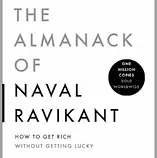
KEY LESSONS FROM The Almanack of Naval Ravikant
By Eric Jorgensen
Eric Jorgenson collects the wisdom of entrepreneur Naval Ravikant on building wealth and finding happiness. It emphasizes that wealth is a skill learned through understanding leverage, specific knowledge, and accountability. The book suggests that happiness is also a choice and a highly trainable skill.

KEY LESSONS FROM The Art of War
By Sun Tzu
Sun Tzu is an ancient Chinese military treatise that provides a masterclass in strategy, psychology, and conflict resolution. It argues that the highest form of victory is subduing the enemy without fighting through superior intelligence and preparation. The book’s timeless principles have been adapted by modern leaders to navigate competition in business, politics, and daily life.

KEY LESSONS FROM The Bible
By God
The central religious text of Christianity, consisting of the Old and New Testaments. It covers creation, law, prophecy, and the life and teachings of Jesus Christ. It serves as a moral and spiritual guide for billions of people.

KEY LESSONS FROM The Entrepreneur Mind
By Kevin D. Johnson
by Kevin D. Johnson outlines 100 essential habits and beliefs that distinguish successful business owners from traditional employees. The book explores how shifting your perspective on risk, failure, and leadership can accelerate your journey toward building a profitable venture. It serves as a practical guide for developing the mental toughness and strategic thinking required to navigate the complexities of modern entrepreneurship.

KEY LESSONS FROM The Hard Thing about Hard Things
By Ben Horowitz
Ben Horowitz offers a raw and honest look at the brutal realities of leading a company through its toughest moments. Instead of offering sugar-coated management advice, it provides practical strategies for navigating "the struggle," from firing friends to managing your own psychology. The book emphasizes that there is no easy recipe for building a business, only the grit to face problems that have no perfect solution

KEY LESSONS FROM The Lean Startup
By Eric Ries
by Eric Ries introduces a scientific approach to creating and managing successful startups in an age of extreme uncertainty. It focuses on the "Build-Measure-Learn" feedback loop to help entrepreneurs shorten product development cycles and discover what customers actually want. The book argues that by treating every business idea as an experiment, founders can avoid building products that nobody uses.

KEY LESSONS FROM The Power of Broke
By Daymond John
Daymond John argues that starting a business with limited resources is actually a competitive advantage because it forces creativity and authentic connection. John uses his own journey with FUBU and stories from other successful entrepreneurs to show how desperation can be a powerful fuel for innovation. The book suggests that "empty pockets" lead to a full mind and the discipline required to build a sustainable brand.

KEY LESSONS FROM The Power of Habit
By Charles Duhigg
Charles Duhigg explores the scientific discovery that explains why habits exist and how they can be changed. By examining the patterns of individuals, successful companies, and social movements, Duhigg reveals that most of our daily actions are not products of deliberate decision-making but are instead automatic behaviors. The book provides a practical framework for identifying the cues and rewards that drive our routines, allowing us to rewire them for better results.

KEY LESSONS FROM The Power of the Subconscious Mind
By Joseph Murray
Joseph Murphy explores the idea that the subconscious acts as a blueprint for our reality, translating our deepest beliefs into physical experiences. Murphy argues that by intentionally directing our thoughts and using techniques like visualization, we can overcome obstacles and achieve health, wealth, and happiness. The book serves as a guide for bridging the gap between conscious desire and subconscious execution to transform one's life.

KEY LESSONS FROM The Productivity Project
Chris Bailey
Chris Bailey spent a year experimenting with every productivity tactic imaginable to find what actually works. He explores the relationship between time, energy, and attention, arguing that productivity is more than just managing a clock. The book offers a "best-of" guide for working more deliberately and effectively.

KEY LESSONS FROM The Rudest Book Ever
By Shwetabh Gangwar
Shwetabh Gangwar is a blunt, "no-nonsense" guide that challenges the modern obsession with happiness and self-importance. It argues that most of our problems stem from poor thinking patterns and a desperate need for external approval. The book serves as a wake-up call to stop seeking "specialness" and instead focus on becoming a person who can think clearly and handle reality.

KEY LESSONS FROM The Secret
By Rhonda Byrne
Rhonda Byrne introduces the "Law of Attraction," claiming that your thoughts directly determine the reality of your life. It suggests that by focusing on positive outcomes and feeling as if they have already happened, you can manifest wealth and health. The book uses various testimonials to support its metaphysical claims.

KEY LESSONS FROM The Seven Habits of Highly Effective People
By Stephen Covey
Stephen Covey presents a principle-centered approach to solving personal and professional problems. It argues that true success comes from an "inside-out" transformation, moving an individual from dependence to independence and ultimately to interdependence. The book provides a step-by-step pathway for living with fairness, integrity, and human dignity.

KEY LESSONS FROM The Subtle Art of Not Giving a F*ck
By Mark Manson
Mark Manson argues that the key to a good life is not caring about more, but caring about only what is true and immediate. He suggests that we have a limited amount of "f*cks" to give and must choose them wisely. The book emphasizes accepting struggle and responsibility over constant positivity.

KEY LESSONS FROM The Third Wave
By Steve Case
by AOL co-founder Steve Case outlines the next major era of the internet, where technology will be fully integrated into every aspect of our physical lives. Case argues that unlike the first two waves focused on building infrastructure and apps, this new phase will require deep partnerships with established industries like healthcare and energy. The book serves as a roadmap for entrepreneurs to navigate a future defined by complex regulations and "impact investing."

KEY LESSONS FROM Think Again
By Adam Grant
Adam Grant examines the critical skill of "rethinking" and unlearning old beliefs in a rapidly changing world. He argues that our ability to change our minds is more important than our raw intelligence. The book encourages a "scientist" mindset over that of a preacher or politician.

KEY LESSONS FROM Think Faster Talk Smarter
By Matt Abrahams
Matt Abrahams provides a framework for managing the anxiety and structural challenges of spontaneous speaking. He offers tools for "on-the-spot" communication in meetings, Q&As, and social small talk. The book emphasizes structure over perfection to ensure clarity under pressure.

KEY LESSONS FROM Think Like A Monk
By Jay Shetty
Jay Shetty distills his experiences as a Vedic monk into practical steps for finding peace and purpose in modern life. He focuses on overcoming negative thoughts, improving relationships, and identifying one's "Dharma" or unique calling. The book encourages a shift from the "Monkey Mind" to the "Monk Mind."

KEY LESSONS FROM Think and Grow Rich
By Napoleon Hill
Napoleon Hill is a seminal self-help masterpiece based on his two-decade study of the world’s most successful individuals, including Andrew Carnegie and Thomas Edison. The book argues that wealth and success originate in the mind, asserting that "thoughts are things" when combined with purpose and persistence. It provides a structured 13-step philosophy designed to transform a "poverty consciousness" into a "money consciousness."

KEY LESSONS FROM Thinking Fast And Slow
By Daniel Kahneman
Daniel Kahneman explains the two systems that drive our thoughts: System 1 (fast/intuitive) and System 2 (slow/logical). He reveals the numerous cognitive biases that lead to irrational decision-making. The book is a foundational text in behavioral economics.

KEY LESSONS FROM Tools of Titans
By Tim Ferriss
Tim Ferriss is a massive compendium of the habits, routines, and tactics used by over 200 world-class performers, ranging from billionaires to elite athletes. The book is distilled from interviews on his podcast, focusing on actionable "recipes" for success in health, wealth, and wisdom. It serves as a practical toolkit for readers to "test-drive" the proven strategies of the world’s most successful people.

KEY LESSONS FROM Who Moved My Cheese?
By Spencer Johnson
Spencer Johnson is a simple parable featuring two mice and two "Littlepeople" trapped in a maze searching for cheese, which represents what we want in life. The story illustrates the different ways individuals react to unexpected change when their source of "cheese" suddenly disappears. It serves as a motivational guide to overcoming fear and adapting quickly to new circumstances to find success elsewhere.

KEY LESSONS FROM Why Zebras Don't Get Ulcers
By Robert Sapolsky
Robert Sapolsky explains the biology of stress and how chronic psychological stress leads to physical disease in humans. Unlike animals that experience short bursts of stress for survival, humans stay stressed over abstract worries. The book provides scientific insights into managing our modern biological responses.

KEY LESSONS FROM Zen and the Art of Motorcycle Maintenance
By Robert Pirsig
Zero to One explores how companies can create entirely new things—moving from 0 to 1—rather than simply adding to what already exists. Peter Thiel argues that true innovation requires building a monopoly through proprietary technology and unique insights. The book serves as a contrarian guide for entrepreneurs to find "secrets" and build a future that is radically different from the present.

KEY LESSONS FROM Zero to One
By Peter Thiel
How companies can create entirely new things—moving from 0 to 1—rather than simply adding to what already exists. The book serves as a contrarian guide for entrepreneurs to find "secrets" and build a future that is radically different from the present.